
The Big Book of AA – Annotated Commentary Edition
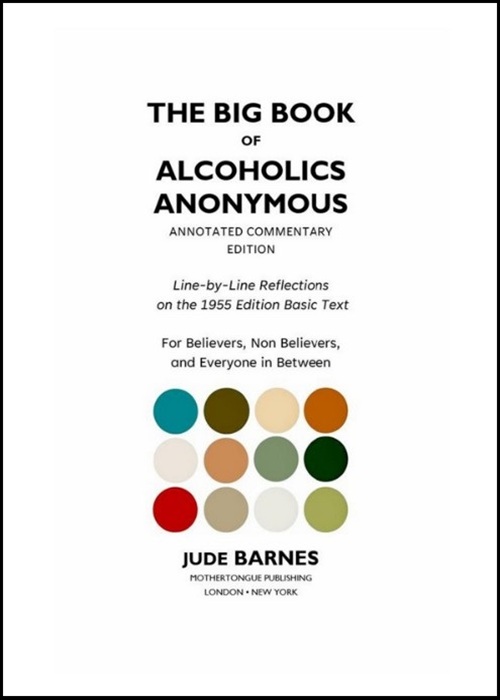
Line-by-Line Reflections on the 1955 Edition Basic Text. For Believers, Non Believers, and Everyone in Between
By Jude Barnes,
“I Needed the Big Book — But I Couldn’t Pretend to Believe”: A New Guide for Agnostics and Atheists in AA
The Big Book saves lives — but only if you survive it.
If you’re atheist, agnostic, feminist, LGBTQIA+, carrying religious trauma — or just not like Bill W, a white heterosexual male from 1930s America — chances are the Big Book has already driven you out of the rooms at least once. Maybe more than once. Maybe for good.
The language is patriarchal, and the tone is moralising. To Wives reads like a 1930s sermon on passive endurance. We Agnostics dismisses disbelief and offers nothing but sentimentality to the agnostic or atheist. And the gendered pronouns can feel like death by a thousand cuts.
So why would someone like me — technically agnostic, functionally atheist, an inclusionary feminist who agrees with Nietzsche that God is dead, and someone who winced at nearly every chapter — end up writing a guide to the whole thing?
Because once I got past the harmful language, and started to read the Big Book critically — line by line — it saved my life. And I’ve watched it save others, too. Not because of what I believe, but because of the actions I take. I’d read it and thought I understood it — but I didn’t. I needed a sponsor who really knew what she was doing to show me beyond the words to the meaning.
The Big Book of Alcoholics Anonymous-Annotated Commentary Edition is my offering to those who need the Steps — but can’t, and won’t lie to themselves about what they believe.
It’s a rigorously faithful, line-by-line guide through the first 164 pages of the Big Book and Dr. Bob’s Nightmare. Every original paragraph is preserved. Every sentence is followed by commentary that helps uncover what’s really being said—beneath the old and sometimes offensive surface.
What Sets This Book Apart
- Line-by-line commentary: The full text is presented in order — nothing skipped, nothing summarised. Each paragraph is followed by accessible, honest, often forensic commentary.
- A detailed rebuttal of We Agnostics: This chapter gets a full philosophical and logical takedown —fallacy by fallacy — without abandoning the power of the Steps it introduces.
- A clear strategy for facing the language: You’ll find a guide on how to deal with the sexist, religious, and moralistic tone of the original text without losing access to the life-saving instructions underneath.
- A companion for the unwilling but desperate: If you’re someone who hates the Big Book — but still hopes it might help — you are exactly who this was written for.
Who It’s For
- Atheists, agnostics, and sceptics who want recovery without belief
- Feminists and queer folks who find the Big Book alienating or offensive
- Survivors of religious harm who still need a way out of addiction
- Anyone who’s tried to read the Big Book honestly — and couldn’t finish it without rage or despair
- Anyone that’s trying to make the Big Book usable for themselves or others, without pretending it’s perfect
You Don’t Have to Like the Big Book — but You Might Still Need It
This guide doesn’t defend the Big Book’s flaws. It stands apart from them. But it also refuses to throw away what’s good. Because buried under the moralism, the misogyny, and the religious assumptions, there is still one of the most effective, spiritually transformative technologies ever written for addiction. Even the word spiritual is secular for me — rooted in the Latin spiritus, meaning “to breathe.” I breathe differently these days. I am at peace.
I didn’t believe in God. I still don’t. I didn’t have a white light moment. But I did experience what William James described as the “educational variety” of spiritual awakening — an undeniable shift in how I relate to life. It came from doing the work, from taking the Steps exactly as they’re laid out in the Big Book, even the parts I didn’t understand or agree with.
I used to skip the prayers. I told myself they didn’t apply to me. But without them, the programme didn’t work. The alcoholic mind just stayed in charge — and that is a whole world of darkness and emotional pain. So, I had to find a way to “pray” — even though I don’t believe in God. For me, prayer became the act of deliberately directing my thoughts — toward honesty, humility, or usefulness — as part of the entire 12 step process, rather than letting fear and self-will run the show. And when I did that consistently, something changed — and it’s held, so long as I stay on top of my programme.
The word prayer still doesn’t sit right with me, but really, it just means thinking or speaking aloud — and I do it, because half measures availed me nothing. With it, I get freedom. Alongside that, I get the privilege of working with others, which did in fact turn out to be the highlight of my life. I was sceptical about that part too.
I don’t do the Steps exactly as they’re laid out for any noble reason — I’m pain avoidant. I don’t cope well with emotional disturbance or turmoil. I can’t think straight when I’m in pain. I just couldn’t find an easier way that works. And I’ve tried diligently. I’ve been very creative in seeing if there’s a way around the Twelve Steps that doesn’t require my full commitment — and it seems that, for me, there isn’t.
Secular versions don’t work for me. My thinking can’t fix my thinking. What is broken can’t fix what is broken and My Self just isn’t able to fix my Self. I need the extra-ordinary (human) power when my ordinary human power doesn’t cut it.
And I learned the hard way what happens when I cut corners. I didn’t drink — but white-knuckling is a torment I cannot undertake ever again. I am finished learning what doesn’t work. I won’t pay that price these days.
So What Did the Big Book Do for Me?
My defects were removed — not all at once, but in the way it promises they will be: when I honestly want them gone and humbly ask. If you’re a believer, it feels like divine intervention. If you’re not, it feels like a deeply effective cognitive shift — like your internal wiring starts to clear. The noise drops. The reactivity fades. I get to make rational and considered decisions (imagine that…). And in its place is peacefulness that feels like freedom.
The Big Book in Appendix II says I get in touch with my “unsuspected inner resources” — and that’s what I found. Not something outside myself, but something I’d never been able to reach on my own. And still cannot reach on my own if I don’t deal with my fears and resentments in Step Ten and enlarge my life with Steps Eleven and Twelve. The Steps gave me access to something inaccessible. I still have to earn it daily. But it’s real.
If you’ve been pushed to the margins of this programme — if you’ve felt unseen, misrepresented, or shamed — please know this: you are not alone, and you do not need to change your identity or your beliefs to recover.
You only need to take action.
The rest can stay yours.
Preview the Book
I’m offering the full preview PDF please click on this link
Questions, Feedback, or Just Want to Say Hi?
Instagram: @understandingthebigbook
Facebook: /understandingthebigbook
“This is a complete, unabridged, and fully annotated edition of the 1955 second edition of Alcoholics Anonymous — commonly known as the Big Book. It includes the entire basic text (the first 164 pages), plus Doctor Bob’s Nightmare, presented line by line with modern commentary. This edition of the Big Book is in the public domain.
This edition is for anyone who wants to understand and apply the Twelve Steps — whether you’re a lifelong believer, a committed atheist, a questioning agnostic, or simply someone seeking change. The commentary offers practical reflections, spiritual insights, and real-life guidance — all woven directly into the original text.
Author Jude Barnes is a devout non-believer whose commentary speaks to those who have struggled with the original text — whether because of its religious language, moral tone, or culturally narrow perspective. This edition acknowledges the historical limitations of the 1955 Big Book and provides a way to engage with it more fully, offering a clear path through the language to the life-saving message beneath. It includes a thorough analysis of Bill Wilson’s blind spots around belief and non-belief — especially in the chapter We Agnostics — so that atheists and agnostics can make progress with the Steps without needing to accept faulty reasoning. The programme still works, even where the author’s argument does not, and this book helps clarify that distinction. It preserves the depth and integrity of the original Twelve Steps while opening them up to anyone who has felt excluded or overlooked — as well as to those with a strong understanding of God, those exploring spiritual ideas, or those who feel no connection to spirituality at all. Once understood, the Twelve Steps welcome everyone, and this book was written to help make that understanding possible.
Inside, you’ll find:
- The complete original Big Book basic text (1955 edition, public domain), fully preserved
- Modern, line-by-line commentary that follows every sentence and paragraph
- A spiritual yet not dogmatic tone that respects all belief positions
- Practical help applying the Twelve Steps in real life — without changing a word of the original
- Thoughtful guidance for believers, atheists, agnostics, and the spiritually curious alike
This edition is for:
- Anyone who wants to take the Twelve Steps but isn’t sure what they actually mean
- Those who sense there’s something powerful in the Big Book but can’t quite access it
- Readers who find the original language difficult, moralistic, or disconnected from their experience
- Believers, non-believers, agnostics, and anyone who can’t find themselves in the God-language
- People drawn to recovery but unsure how to engage with the Big Book as written
- Newcomers seeking a clear, honest guide through the Steps
- Long-time members revisiting the Big Book from a new perspective
This is not a summary or study guide. Nothing is paraphrased or modernised. The original is preserved in full and accompanied by commentary to help the reader unlock its meaning — especially when the language feels dated, moralistic, or confusing.
Whether you’re new to the Big Book, returning with fresh eyes, or trying to work the Steps without pretending to believe — this edition offers a clear, inclusive path through the foundational text of recovery.”
Jude had her last drink on 13 March 2000 after hospitalisation and a three-month rehab that took her to AA meetings every night. She is forever grateful to her first sponsor, who guided her through the Big Book exactly as it was written, without imposing her own beliefs, allowing Jude to maintain her own — agnostic in theory and atheist in practice, as it remains today. In her tenth year, she started an agnostic AA meeting in London. Now, with twenty-five years sober, she is part of both the mainstream and secular AA communities and lives a life richer than she could ever have imagined.
For a PDF of this article, click here: The Big Book of AA – Annotated Commentary Edition.



Where to start, I had 15 years sober. I went to meetings several times a week for 12 years. I was involved, service work, all of it. I was the atheist in the room, and I always mentioned that. I told new comers, if they didn’t belive it was possible. But AA’s refusal to change, the need to read that crap at the start of every meeting. Suggesting that you aren’t sick, yet if this program doesn’t work it’s because you are spiritually and morally incapable of being honest? I’m no secret, there is not a single thing I won’t admit. I have made amends by not repeating the behavior. But that behavior was allowing myself to be a victim. I have read the book critically, I gave it 12 years of chances. Every thing you wrote rubs me wrong. Do you think we should take responsibility for for physical and sexual abuse, even at ages when we had no control? I’m sorry you can take that book apart, but you can’t change what it means. And you can’t change the dogma of AA. Even psychiatrists and other mental health professionals are starting to see how AA retraumatizes victims of abuse. Demanding they take responsibility for the abuse inflicted on them. Reading this feels like you are defending that stance. If I was just willing to look at it “critically”. I’m sure you are making a pretty penny off this. I’d love to send you a Pic of my alter to the doorknob, they never meant that we can make anything our higher power, it was with a wink and a nod, just until we find God. You call yourself an atheist and a feminist and reinforce that.
Sincerely, with a wink and a nod.
Michelle
Hi Michelle. You are angry and see the problems with Bill’s book (as well as Jude’s book). Of course you are right. As Billy-goat John said to me as I refused to listen to the hierarchical dogma implicit in that book, “do you want to be right or do you want to be happy?” My solution to the problem has included the realization that AA is wrong and cannot change, and yet if it had not been available I would probably be dead. And here I am, contented, 38 years without a drink and still participating in AA without being concerned by those who truly think a supernatural being is their friend. And I rather doubt that Jude expects to make a pretty penny off of it–mostly written to be helpful to people like me when in earlier stages of figuring out a solution.
Thank you for taking the time to write. I hear the pain in what you’ve shared, and I take it seriously.
No, I don’t believe anyone should take responsibility for the abuse inflicted on them. Not ever. Especially not as children. That idea has done enormous harm in the name of healing, and I reject it completely.
I share your experience. I couldn’t live with the idea of taking responsibility for something that was never mine to take. That kind of misapplication of Step work can retraumatise people and drive them further from the help they need. I’ve seen it happen. I’ve felt it myself.
Like you, I sat in meetings feeling sickened by the readings, the tone, the assumptions. I’m an atheist too. I didn’t write this book to defend the dogma—I wrote it because I couldn’t fake belief and I couldn’t ignore the harm. But I also couldn’t deny the fact the Steps saved my life.
So I went back through the Big Book, line by line to expose the coercion, the blind spots, the misogyny. I kept what healed and rejected what hurt. My aim was never to excuse what’s broken, but to offer a path through it, for myself and maybe it would be helpful in some way to others who couldn’t believe but still needed a way out.
That being said, it is a deeply difficult book. If you’ve found other texts or frameworks that have helped you live free, I would sincerely like to know more about them. I mean that. We’re all trying to build lives that make sense after what we’ve lived through—and no one has the monopoly on that wisdom.
I’m sorry this article rubbed you wrong. That’s never what I wanted. I hope you find the spaces and voices that do feel safe, honest, and restorative for you. You deserve that. Take care and thanks for sharing your thoughts with me I appreciate it very much.
Your article this morning means a lot to me Jude. I suddenly understand why I was able to suggest to a young woman in the secular group I started in 2015 that she might want read pages 60-63 and 86-88 on a regular basis. My sponsor insisted on it so I did that and several other apparent religious rituals despite feeling they were fake. And I recovered from the problem of finding beer the only solution to my inner torment to realizing the torment was caused by beer (a lot of it–like drinking hard stuff).
What have I done to reconcile a belief in the Big Books beneficial effects on me while refusing to read the big book in the meeting I usually chair? Well, I started that meeting where I have now learned from you how I somehow managed to overlook the foolishness there generated by Bill’s fevered brain and yet pulled out a solution for me. You wrote a book describing how you accomplished the same thing.
Thanks for showing me how it worked for me.
Thanks so much Lance that means a lot it really does. It’s been a journey hasn’t it (for us both, the knowing what is possible to overlook part) and I’m so happy you got to the good stuff too. If your meeting is on zoom I’d love to pop in one day.
Thanks so much Lance that means a lot it really does. It’s been a journey hasn’t it, it’s not easy to stumble around trying to know what can be overlooked. I’m glad you found a way to the good stuff too, if your meeting is on zoom I’d love to pop in one day.
Sorry, no zoom. 8 of us this morning, 2 believers, 3 atheists, and 3 unknowns. Not a bad mix. 3 women, 5 men. This was a big meeting comparatively and I had an atheistic woman volunteer to lead. One brand new woman who may have been a bit shocked by my outspoken assertions about the damage done by that book. And it’s over 300 miles to the next named secular meeting in Regina, SK, over 400 to the one in Fort Collings, CO, and over 700 east and west.
This is perhaps the best promotional book blurb I have ever read. Informative, motivational, hopeful and – maybe this is why I enjoyed it so much – it reinforces many of my own opinions about the remarkable strengths despite glaring flows woven through the big book. Of course I’m going to buy and savour Jude’s book.
That is so kind thank you. I hope you get something useful out of it.
I would like to get a physical copy of this book. I find the commentary extremely helpful to overcome my religious bias and the antiquated language of the big book. 98 days sober and many trips in and out of the rooms has given me the gift of desperation. Thank you so this work I think many people will benefit from it.
I wish it could be a physical book. It’s so expensive to print (000’s) and Amazon take 70% of royalties as it’s a public domain work as per their guidelines – so it will take a long time to reinvest the 30% to make a print run. I don’t think it will generate enough sales to do it but I don’t think it will be possible. Sorry to be less than helpful!
I thoroughly enjoyed reading Jude’s piece here as well as some of the excerpts that were provided. There were so many re-phrasings of Big Book concepts that caught my eye, like, “it feels like a deeply effective cognitive shift” and the need to “enlarge my life” with Steps Eleven and Twelve. There are many, many more.
Your work, Jude, is extraordinarily thoughtful and it is a pleasure to read something this engaging and so well written.
Yes, I’m in. I’m buying it !
P.S. Michelle’s post is so VERY important, and I hope Jude’s commentary will address the Big Book’s silence about abuse that is definitely not the fault of a child, adolescent, or grown-up for that matter.
Thank you for your kind words John and I agree that Michelle’s post is so very important, I hope I could answer it adequately.
Unlike Michelle, I hope that Jude will earn more than just ‘a pretty penny’. In my opinion, someone who has created 1,300 pages of high-quality content deserves at least ‘a shiny sixpence’. I am very glad that the Big Book is now accessible to those of us who disagree with its religious approach. We mustn’t forget that in 1930 America people’s businesses were boycotted if they didn’t regularly attend church services. Therefore, it is reasonable to assume that openly promoting atheism would have made publishing the book even more difficult, and the fledgling group of ex-imbibers would have disappeared rather than developing into the worldwide organisation it is today.
Unlike the Bible, the Big Book is not based on lies; it is based on a concept that saved my life. To me, the message of the Big Book is the ultimate canine testicular appendage, regardless of whether it is interspersed with religious excrement.
Thank you, Jude, for the enormous amount of work you put into this. I checked a few passages at random, and your comments and interpretations are spot on. I’m sure that those who read your work will eventually provide some useful feedback.
Some humble advice for those who dislike the idea of an annotated copy of the Big Book: Don’t buy it and refrain from commenting.
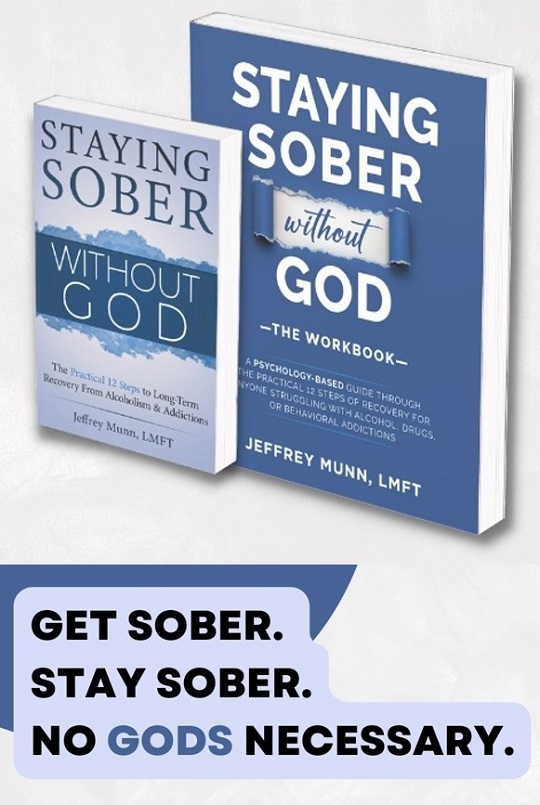
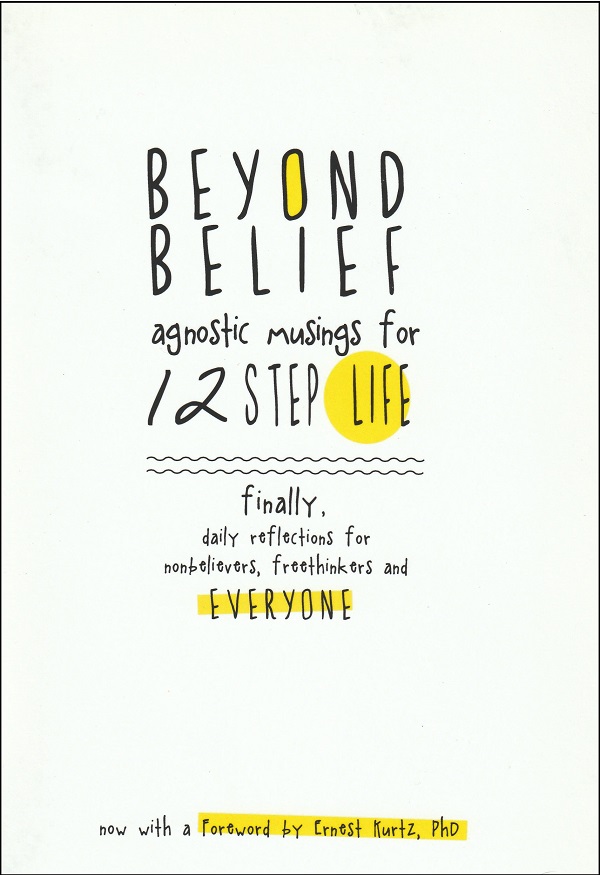
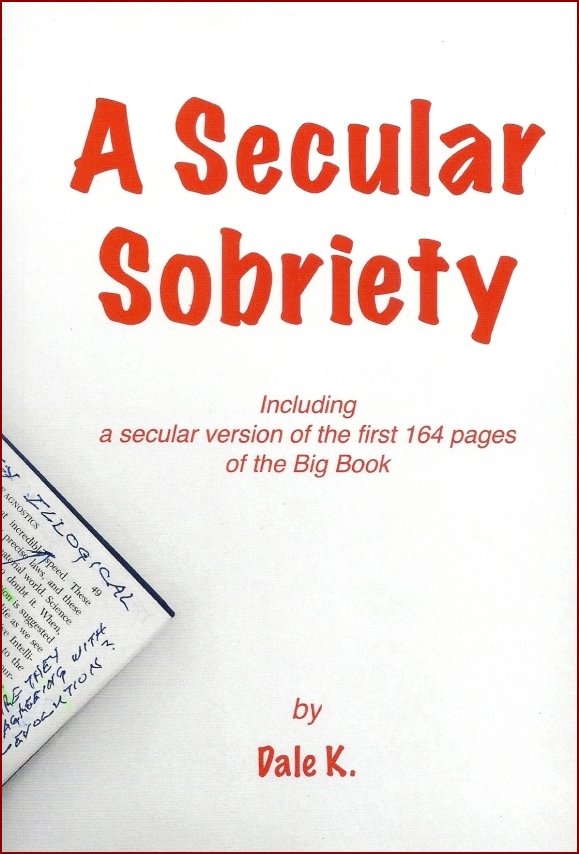
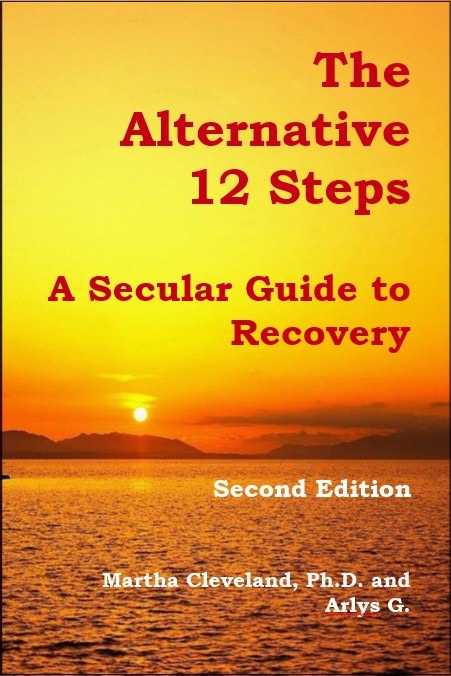
I left AA 2.5 years ago way too much aa-god dogma for me. I might look into your book but I have J Munn Staying Sober without God and The Proactive 12 Steps by S. Prengel 2 really good agnostic non-believer recovery books.
First of all, thank you Jude for taking the time to go through the big book like this, its something that is needed for all us atheists and agnostics in the rooms. Like Jude I have gradual had a shift in thinking, I doubt I will ever find ‘god’, but I have found peace carrying out the daily rituals.
I hear Micelle’s pain, and I have heard of others being told similar. In my view, no one should have to take responsibility for any abuse inflicted upon them, and any sponsor suggesting so should be dropped.
Appropriate sponsor behaviour is another discussion but I would recommend to any sponsee to seek professional help in such cases.
Like Douglas, I too would like a physical copy. I’ve read Jude’s reply but I hope if a few more people add their voice to the request it may get closer to getting a print on demand version.
Thank you so much and I wholeheartedly agree about sponsorship. I can only accept what works for me, the very limited guidance in the Big Book on the role of another person in the 12 Step process. When an alcoholic offers their opinion, when I do, I cannot know if this is helpful or harmful so I stick to the instructions. (and yes it’s clear also that outside help can be sought, we are beside other specialisms not apart from them) – the risk of even well meaning alcoholics causing harm is too great for me to go off piste honestly.
Amazon only support 500 pages in print, mine is 1,315 pages so I’ll have to see if that could be possible elsewhere, like Barnes & Noble, some day. Thanks so much for your kind & thought inspiring comments.
One of the unfortunate consequences of how AA has evolved is to co-join spirituality with a mandatory theist belief, largely based on the God of the Bible in the Judeo-Christian culture the Big Book was written in. Jude, I haven’t read your book but it sounds like you’ve made a critical and positive contribution in helping to bridge the gap between dogmatic theistic rigidity and a more inclusive and malleable spiritual path to help guide people’s recovery journey. True spiritual growth stems more from a symbolic non-literal study and interpretation of wisdom rather than mindlessly bowing down to an omnipotent daddy figure. That said, the history of AA is to treat any amendment to Big Book Holy Writ as a existential threat to the fellowship’s survival and to fight against it. Change doesn’t seem to get any foothold in AA no matter how out of date the text is.
It’s my dying gasp to do something borne out of seeing people suffer, drink and in some cases die because the words in the BB don’t help …and not all of us had the chance I was given to be shown a way to understand the meaning. It’s just what I was given over the last quarter century – but in a book. I really hope it helps in some way – there is genuine greatness, life saving goodness in that book but it nearly finished me off trying to get to it. Thanks for your comments, appreciated.
Bought it, reading it. I will get back to you on what I think, but honestly what I think doesn’t matter. I am willing to read anything that removes stumbling blocks in the AA literature that might help the suffering alcoholic. Period. I love to read alternatives to traditional AA.
Lordy. 🙂
I’m sure glad such a “take-spin-interpretation” of Wilson’s Supernaturalist, Neoplatonist, Protestant, Christian Theistic TEXT has helped you to begin to build a better life for yourself outside of the bottle.
All the things found in that TEXT are what I believed, lived, and practiced for 20 years. Hard core, All-in. That began, for me, as a result of a Religious/Spiritual/Mystical experience on a Houston freeway at 4:30 PM on August 15, 1978.
I had not been raised in religion.
I am a product of more rigorous forms of the “way of life” that the Big Book purports to be “The Solution to Alcoholism.” I gained much, to be sure….by that “way of life.” Many of the principles and daily practices helped me to get a grasp on many aspects of myself and others and provided a solace…. it ‘is” a “powerful system.” And in my case, those “principles and practices” enabled me to achieve professional excellence in a profession that eats people alive.
Yet, in my case, none of those “beliefs and daily practices,” however they were “beneficial” to me personally, PREVENTED me from becoming a drunk.
Wilson sets out his take on more general “beliefs and practices” of a wider Evangelicalism, than the myopic stupidities of the Oxford Group.
One thing is clear: None of the alleged “First One Hundred” had Wilson’s Holy Book, or his Holy Steps. Nada, nope.
In my view, there is no form of Big Book-O-Mania, or 12 Step-O-Mania that widens the gates for ALL DRUNKS Who have a desire to stop drinking.
And frankly, I would be hard-pressed to find a TEXT that is more intellectually dishonest than AA’s Big Book. Unless of course, it would be the Twelve and Twelve.
There ARE some babies in that bathwater….. no doubt.
After a point of fundamental agreement that there is value in the Bigga Booka, and that it is somewhat unfortunate that many in the secular camp dismiss it in its entirety, you lose me (and surely many others) with your proclamation about “doing the Steps exactly as laid out.”
There aren’t many BB Thumpers who are atheist — a rare breed indeed!!
Sorry, but for me, the “woo” in this article isn’t far beneath the surface. “Secular versions don’t work for me. My thinking can’t fix my thinking. What is broken can’t fix what is broken and My Self just isn’t able to fix my Self.” That could have been drawn from Thumperville.