
An Alcohol-free Margarita with 12 Secular Steps

By Alcohol-Free Margarita,
The following are my own versions of the 12 Steps. I consciously wrote my Steps in the present tense because my disease is chronic and needs daily treatment and my Steps are worded to stress taking active responsibility for myself, not giving up my power, yet valuing the courage to seek outside help. I gave up my power to alcohol.
Step 1 – Honesty: If I succumb to compulsions or addictions, I give up a rich full life.
Step 2 – Hope: I can find support and guidance from others to help me on my path of self-discovery for my recovery.
Step 3 – Commitment: Each day I commit to seeking, analyzing and applying insights from relationships and resources that reinforce my recovery.
Step 4 – Introspection: I intensively seek awareness of examples, patterns and origins of my destructive thinking and behaviors.
Step 5 – Trust: I openly share and take feedback on examples, patterns and origins of my destructive thinking and behaviors with a trusted person/s.
Step 6 – Determination: I list my destructive thinking and behavioral impulses and am ready to seek healthier alternatives.
Step 7 – Healing: I cultivate thinking and behavior that foster healthy relationships with myself, people, and the planet.
Step 8 – Compassion: I make a list of persons whom I have wronged and commit to making reparations conscious not to cause more harm.
Step 9 – Reparations: I seek out opportunities to right my past wrongs.
Step 10 ~ Self Examination: I strive to be mindful of the impacts of my thoughts, words and actions and correct for any harm they do.
Step 11 ~ Mindfulness: I observe and appreciate the workings of my inner mind and my connection to the outer world.
Step 12 ~ Humanitarianism: I share my joy of living sober with others when invited to.
My Thinking Behind These Personalized Steps
PRINCIPLES: Honesty- Hope- Commitment- Introspection- Trust- Determination- Healing- Compassion- Reparation- Self Examination- Mindfulness- Humanitarianism
Step 1 – Honesty: My “compulsions/addictions” is plural. They manifest as a reflex to avoid fears. To recognise a substance or activity as unhealthy, my most reliable red flag is the sense of shame with a desire to hide or isolate with secrecy or dishonesty. I hadn’t realized what burdens secrecy and dishonesty really were until living without them. Honesty is critical to my serenity.
Before sobriety, my life became singularly about active addiction, not the rich life full of relationships, feelings, and activity I enjoy now.
Step 2 – Hope: For me, “the power greater than” myself is other people and their experience with overcoming addiction. I had an aversion to the four-letter word, H-E-L-P. Now I’m leaving behind the excessive self-reliance, and instead, valuing help-seeking and vulnerability in others and myself.
Hope is what kept me coming back in the beginning coupled with the 3rd Tradition, “The only requirement for membership is a desire to quit drinking”. I was still in denial about being an alcoholic even though, four years ago, I could not imagine a life without it and could not quit for even a day. I watched powerlessly as my arm kept reaching for a bottle. When I started attending meetings, I saw folks experiencing their lives sober; bravely and successfully confronting problems head on. I wanted that.
Step 3 – Commitment: Forgive the excessive alliteration in my Step 3. To me, the original wording of this Step feels too passive and like more of my not taking responsibility for myself. My recovery is based on my action-taking, not on someone else doing for me. True: “I alone can do this, but I cannot do this alone”. I need to exercise the action-taking, including help-seeking, to overcome the “fuck-it” reflexes I mindlessly lived for so long.
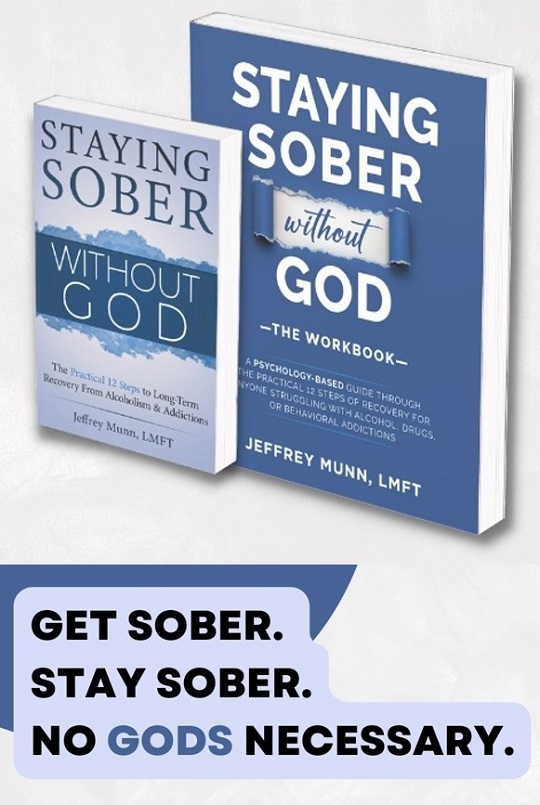
Step 4 – Introspection: My wording of Step 4 attempts to be more explicit about my goals in working it. An immeasurable benefit of Step 4 was organizing all the pain in my history into manageable columns instead of letting memories ricochet and echo inside my head. This exercise quieted the noise. I benefitted from Jeffrey Munn’s outline.
Step 5 – Trust: Therapists, sponsors, and sober sisters helped me distinguish my own “wrongs” and forgive myself for tolerating mistreatment. I started to learn how not to regret nor turn my back on the past. I simply didn’t know what I didn’t know. Now I do and now I will do better. Additionally, my judgement of who is or is not trustworthy has improved.
Step 6 – Determination: No one can do this Step for me. Also, I need to stop seeing myself as “defective”. Perhaps that word used in the original Step 6 had a different nuance to its meaning in 1935. In 2025, I need to see my unhealthy thoughts and actions as old defaults that made sense to use in my childhood even if they don’t today. Again, I didn’t know what I didn’t know before therapy, quit-lit, secular recovery literature, and meetings.
Step 7 – Healing: I feel like I’m finally prioritising living my values, for example, veganism for the planet, which reduces cognitive dissonance and the impulse to numb myself.
Step 8 – Compassion: I’m still realising the harm I caused. Step 8 is incomplete for me. Many shares in meetings of others have helped me gain insight into the impact my addictive behaviour had.
Step 9 – Reparations: I am grateful for the confidence I’ve gained by confronting discomfort when acting on Step 9. Plus, when I do the next right thing, I feel good.
Step 10 ~ Self Examination: A self-examined life is a rich full life. Plus, Steps 1 through 9 can never be completed. I will never have all the answers, but I hope to be constantly striving and open to learning and improving. I journal daily starting with gratitude then reflecting on anything that might be eating at me. I get honest with myself and follow through. Step 10.
Step 11 ~ Mindfulness: I meditate daily to exercise my mind to better handle daily ups and downs throughout the rest of the day, one day at a time. A focus on NOW with gratitude for the impermanence of feelings motivates me to enjoy the good while it lasts and reassures me I will overcome the bad as well.
Step 12 ~ Humanitarianism: Gratitude is my motivation to help. Mine is a pay-it-forward program. I value respecting the Tradition of “attraction” not “promotion” out of practicality as I was not going to listen to anyone promoting sobriety until I was ready. Additionally, service work has brought me closer to countless impressive individuals.
I continue tweaking the wording of my Steps. For example, originally, I worded Step 1 as “I cannot have one drink (mind-altering substance) because I have addiction problems that cause me to harm myself and others”. My more recent version feels more succinct, yet the former feels more explicit. It may change again.
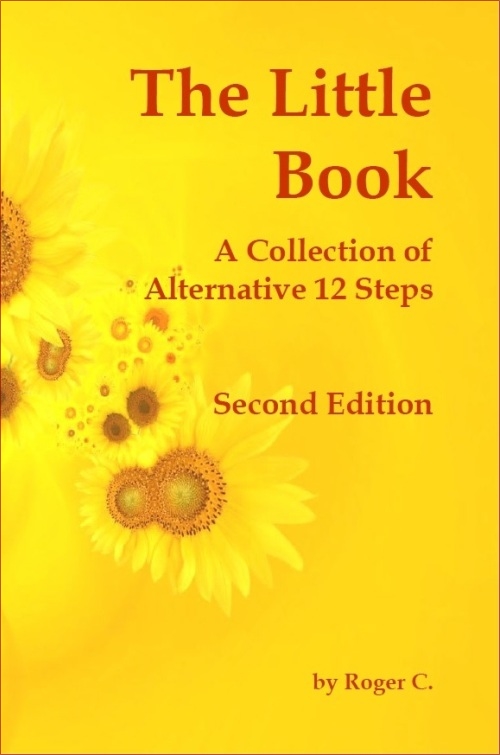
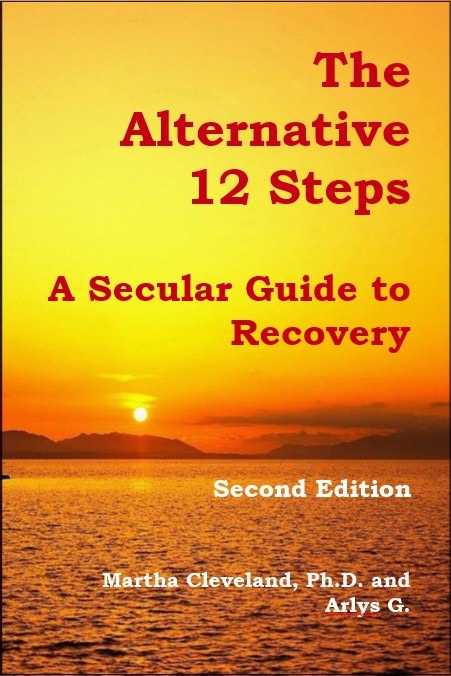
I’m grateful for falling in with a small group of women about three years ago who decided to dissect the Steps together one by one for an hour a week. We happened to use The Alternative 12 Steps by Martha C. and Arlys G. We read together, stopping frequently to react with a focus on our journey over any destination. We gave ourselves the homework of each writing our own personalised versions onto a shared Google document then met to explain our thinking to each other. We’re still meeting to read other books together or to just check in enjoying the timeline-free journey of our weekly hour-long discussions to this day and still have our shared collection of each other’s individualised secular Steps. Over the last three years we’ve shared joys and burdens and celebrated growth in ourselves and each other. I love having these women in my life. I, and some of us, also have sponsors and sponsees whom we cherish deeply, but for some in our little group, we serve as each other’s sponsors or “recovery partners”, and that can also be enough.
I share my writing today in hopes others may benefit from the idea of developing a close group of recovery partners and/or of putting the Steps into wording that makes personal sense to them as I did for myself. If that doesn’t work for you, I hope you successfully create your own path and please share.
Thank you, Roger, for inviting me to share on my 12 Personalized Secular Steps.
Margarita has been alcohol-free since June 20, 2021, after discovering religion-free AA on zoom. She gratefully joined the Board of Secular AA serving as secretary as of October 2022 for a 4-year term while also participating in organizing Secular AA’s monthly Global Speaker Tour events in addition to International Conferences of Secular AA in 2023, 2024, 2025, and 2026 as well as the bi-monthly newsletter. This is her 2nd submission to AA Agnostica. Her first was A Zoom Baby Attends ICSAA 2024.








Wonderful. Wonderful. Thank you.
Margarita, I loved how you transformed your steps into a story about how you created them. As one philosopher said, “One can flourish AND flounder in the terrain of insight long before its shape becomes clear.”
A story or any other “terrain of insight” becomes clearer, sharper, and more comprehensible each time you tell and retell it. However, the key is to engage in the creativity of creation. Anything you make (i.e., create) increases the likelihood that you’ll understand it.
Excellent!!! Very helpful. Thank you.
Thank you so much Margarita…lovely…all of it.
The freedom gained from recovering from the hold alcohol had on me has given me the ability to be more and more honest regarding who I am and how AA works and does not work for me. Your sharing is inspiring.
Margarita, there’s a lot to unpack in the steps you’ve written. Your approach speaks to how complex addiction is and how comprehensive a program of recovery needs to be to both be free of addiction and to claim ownership of a life well lived. I find the traditional version of the steps far to narrow and too reliant on handing responsibility over to an omnipotent being. Giving the person agency to write their own version of the steps can help unlock inner voices that are crying out but not heard. Your approach is very empowering. You might consider putting your steps and recovery journey into book form.
What a beautiful and intelligent articulation of your program and the meaning behind the steps for you, Margarita… I felt no resistance to any of it, and I do usually want to tweak every alternative version I’ve heard. Yours were very smooth and simple.
I also appreciate Alyss and Martha Cleveland’s version and take on the steps. A few of us went through her book right before the pandemic. And I’m just finishing up Jeffrey Munn’s workbook version with a group of ladies. He did a nice job as well.
And ain’t it the truth that we continue to tweak what we need to focus on for the rest of our lives? I also had to learn a balance with that so that I wasn’t picking on myself too much. That was a good point you made in your article, too.
I’m glad you took the time to write such a thoughtful article.
My therapist recommended a 12 step program for me today. But I really balked at the idea because I am a non-believer and I don’t like the concept of handing over my agency to someone. Or something. This is amazing. Thank you. This is the path I will follow for my 12 steps.
So glad you found my article helpful! I am grateful for this website and its links to so much great recovery resources. I hope it serves you well, too.
Margarita, I like the way you apply yourself and view the Twelve Steps of AA. HAPPY 24 HOURS. Luis Tomas, from Mexico.
Hey everyone, at SOAAR 2025 (Secular Ontario AA Roundup in Ottawa, Canada), Margarita is one of three panellists (followed by Q&A) talking about “What does it mean to be secular in AA?” and she goes through her 12-step interpretation.
https://www.buzzsprout.com/1536487/episodes/17926548