
A History of Agnostics in AA
This article was originally posted on AA Agnostica on April 13th, 2017
By Robin R.
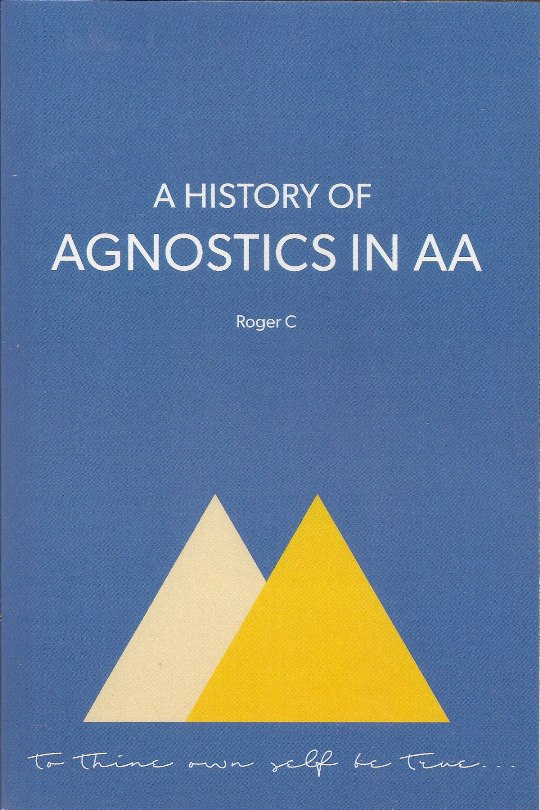
A History of Agnostics in AA is a timely book that should be read by all AA members, nonbelievers and believers. It accurately portrays the experience and the history of agnostics within the fellowship of Alcoholics Anonymous.
The book begins with a rather “conventional” AAer insisting that the only path to sobriety for a true alcoholic is the first 164 pages of the Big Book, the God infused 12 Steps and Conference-approved Literature. This summarizes the firmly held opinion of a significant majority of members and the problem faced by many newcomers to AA.
The book is divided into three main segments. The first deals with Our History, the second with Problems in AA, and the final with how our secular AA is Moving Forward.
Our History
The author, Roger C, the manager of this website, has presented a chronological history of agnostics and agnostic group’s experience within AA and at the hands of traditional AA fundamentalists. Parts of this history are not pretty but it must be told and understood if AA is to move forward and to truly accept our third tradition, “The only requirement for AA membership is a desire to stop drinking”, and be a model of inclusivity.
The author writes about the anguish and shock of having his own group unceremoniously removed from Toronto Intergroup’s meeting lists and being denied participation in Intergroup affairs. This battle, thoroughly recounted in A History of Agnostics in AA, eventually resulted in charges of discrimination and, via the Human Rights Tribunal of Ontario, finally led Intergroup to reinstate the groups after their five years of expulsion.
Toronto is not unique. Similar discrimination has been experienced in all parts of North America.
 But the book also tells the success stories of individuals who have toiled relentlessly to ensure that there is a home within AA for we agnostics. Don Wilson launched Quad A in Chicago with the first meeting for agnostics in AA in 1975. Charlie Polacheck and Megan D started the first AA meeting ever called “We Agnostics” in Hollywood in 1980. And Ada Halbeirch deserves a lot of credit for being a key part in starting secular meetings in New York (1986) and in Delray Beach, Florida (1987). In telling their stories, Roger gives these warriors the recognition and respect they earned.
One of the primary arguments for the expulsion of agnostic groups is the charge that they change the 12 Steps as written and copyrighted in 1939. The reality is that we have no interest in changing the “official” Steps. But we do insist upon the right to interpret them to make them relevant for our own needs. A quote from the book says it all, “If God can be ‘as we understand Him’ then surely – surely to god, so to speak – we can interpret the Steps as we wish.”
Problems in AA
The second part describes the problems within AA. The struggles of other demographic groups – “special composition groups” – to achieve acceptance within AA is shared. These groups include Women, Black Persons, Young People, and the LGBTQ community. Each of these groups had to fight for a place within AA and all of these struggles are told in A History of Agnostics in AA.
Another problem is the increase in religiosity within AA and in particular the dominance of Christianity. The majority of North American AA meetings now close with everyone holding hands in a circle and reciting the Lord’s Prayer. It is hard to explain to a desperate newcomer that AA is not religious when meetings are closed in this manner. The book tells us about fundamentalist groups such as Back to Basics and Primary Purpose and religious documents such as the Mt Rainier Minority Opinion and the White Paper, which have clearly had an impact on conventional AA. Their premise is that there is only one way to sobriety, on your knees, by the Big book, and there shall be NO exceptions or interpretations, PERIOD!
Roger C also describes “Conference-approved” literature as one of the long term and growing problems in AA. In July 1976 a Trustees AA Literature Subcommittee wrote that a pamphlet “is needed to assure nonbelievers that they are not merely deviants, but full, participating members in the AA Fellowship without qualification”. A pamphlet for, by and about agnostics in AA has never been published by AA World Services. And that statement was made forty years ago.
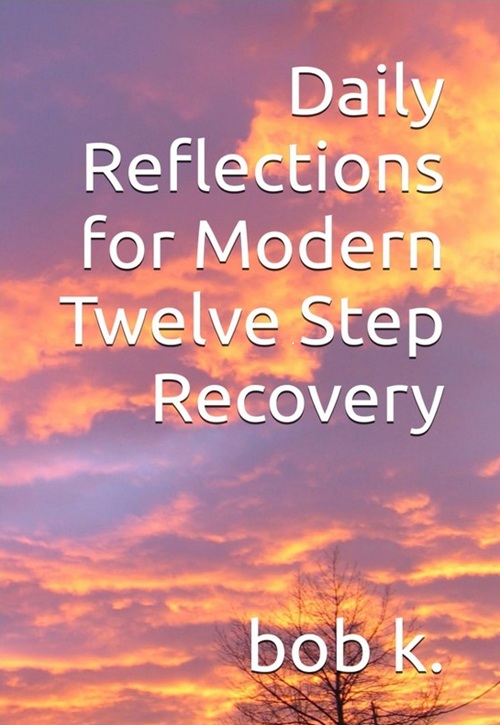
Meanwhile, much of the current AA literature is religious, an example being The Daily Reflections published in 1990. Like many other AA publications, it is heavily God centered, further reinforcing the religiosity of the program. Two hundred and forty-two of the 365 daily reflections specifically refer to God.
Bob Pearson, a retired Manager of the General Service Office, talked about how Conference-approved literature led to the “banning” of other books, at a conference in 1986. And he was right. And the problem is much worse now than it was then. And that has to change.
Moving Forward
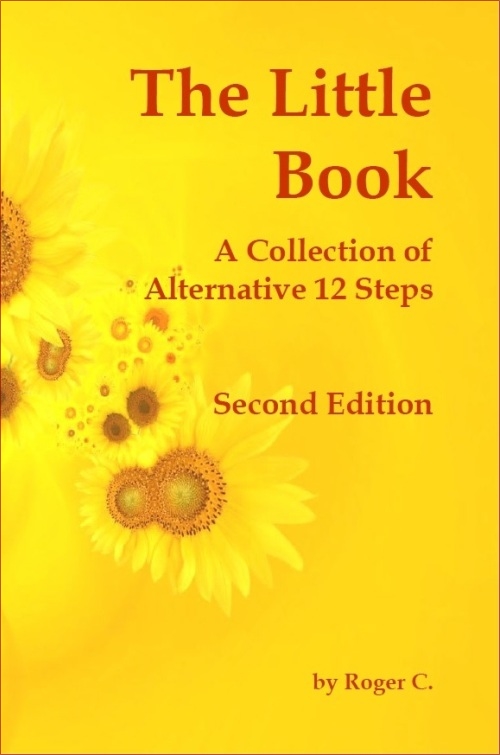
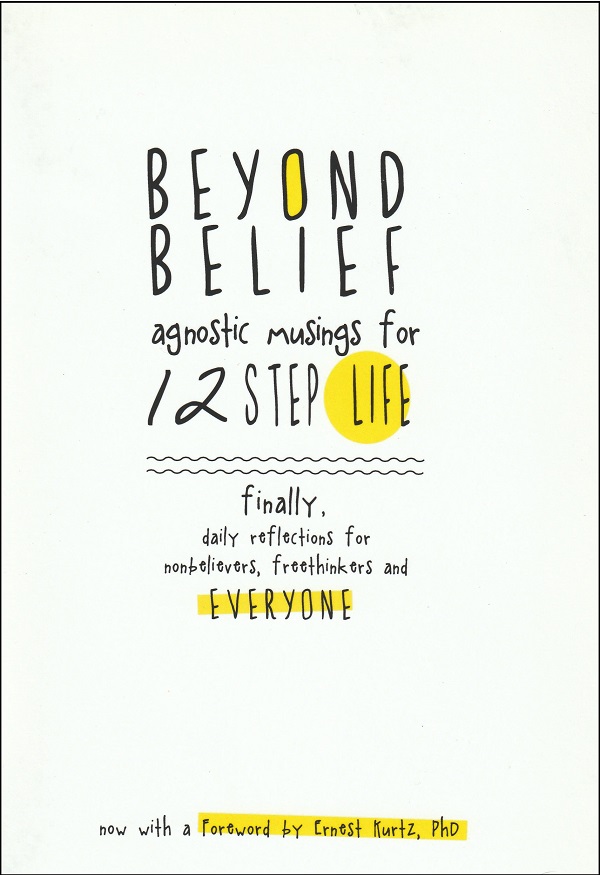
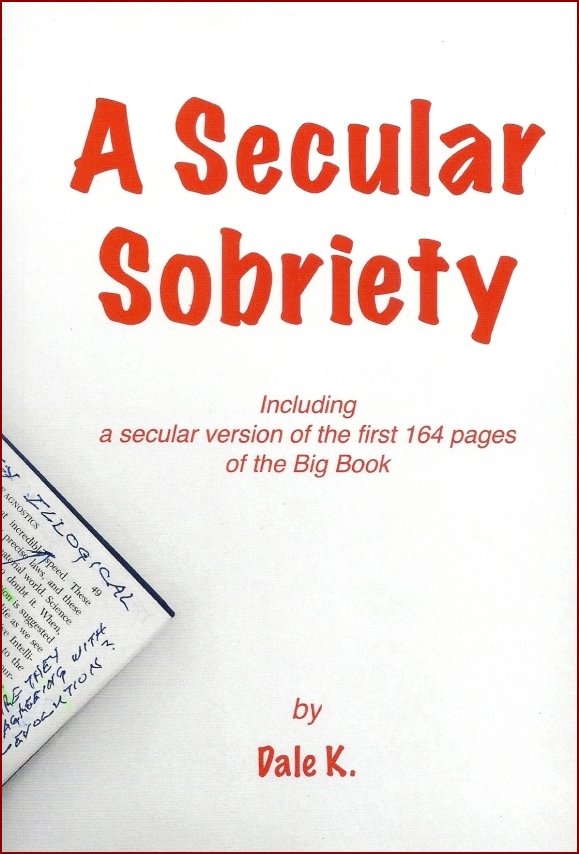
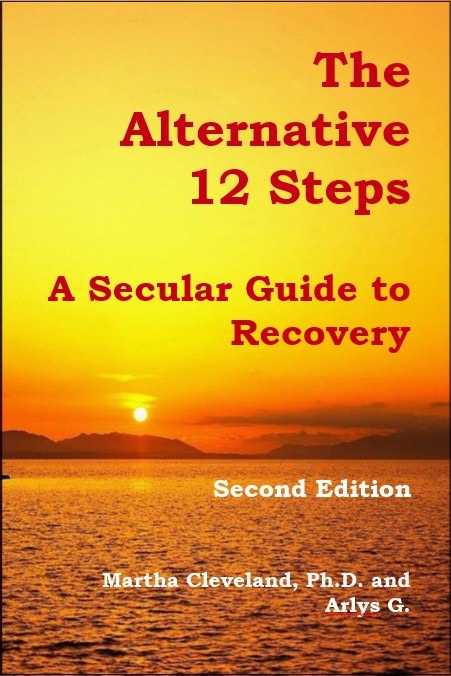
In this section, as a follow-up to the previous one, the author lists and provides an outline of ten books written and published by agnostic AA members. Topics cover alternatives to the 12 steps, individual agnostic experience, strength and hope and a daily reflections book for nonbelievers.
Roger C then has a chapter on the first International Convention for We Agnostics held in Santa Monica, California, in 2014. He outlines the planning and implementation of this convention. He introduces us to the speakers who participated and the subject of their talks relative to the inclusion and expansion of agnostics, atheists and freethinkers within the AA family. The convention was an unqualified success and led to the scheduling of the second conference in Austin, Texas, in 2016.
Planning for both conferences proved that within our secular AA movement there are diverging opinions on the tactics for pursuing expanded acceptance within the overall AA fellowship. Those problems are dealt with in a chapter called “Progress not Perfection”. However, even with the conflicts on a variety of subjects, the second Convention in Austin, as is touchingly well told in a following chapter by life-j, was successful with increased attendance and lessons learned for the third international convention – called a “conference” – in Toronto, Ontario, in 2018.
The author next highlights the exponential growth in secular AA groups. In 1997 there were 26 secular groups in the US. The latest number is 384 worldwide. The number of agnostic AA related books being published continues its unabated growth. Websites including Roger’s AA Agnostica, AgnosticAANYC, Rebellion Dogs Publishing, WAAFT Central / Secular AA, and AA Beyond Belief have been created and are growing, providing we agnostics a much needed platform for sharing our experience, strength and hope. These advances in secular AA demonstrate that agnostic AA will not be deterred in demanding its place as a full participating member within the AA fellowship.
Roger C concludes that the conventional AA insistence that God “must” be part of everyone’s sobriety needs to be put aside. There are legions of AA members who have successfully attained long term sobriety without any intervention or assistance from a Higher Power/God. For most of us, this fellowship works because one alcoholic talks and relates to another alcoholic, each promoting and supporting their individual sobriety. Agnostics in AA have no desire to force anyone to adopt their disbeliefs. However, it is imperative that the AA fellowship acknowledge that it is possible and totally acceptable for a nonbeliever to benefit from the fellowship of AA and that any and all barriers must be eradicated.
Appendices
The book finishes with three appendices. The first contains three revised and secular versions of “How it Works”.
The second is the histories and experiences of ten individual agnostic groups in Canada. There was only one group in Canada in 2010 and now there are 25 in five different provinces. These are terrific and brief tales of what inspired these groups, how they got started, and how they are formatted. They can be especially helpful for those wanting to start their own secular AA meetings.
And the third appendix contains five stories which were originally published in AA Agnostica.
Roger C deserves a huge “Thank You” from not only agnostics in AA, but from AA members in general. His book not only succinctly details the history of agnostics within AA but it also identifies the changes in attitude, actions and culture which the entire AA fellowship needs to implement in order to ensure the survival of this oasis for the future struggling alcoholic looking for help. As it says on the back cover of the book: “Our hope is that Alcoholics Anonymous adapts and moves forward, with greater inclusivity. A History of Agnostics in AA is meant to contribute to that goal”.
Let’s hope it succeeds.
And let’s do our own bit to make sure that goal is realized.
Robin is a grandfather with six grandchildren and for the last decades he has been married to a saint. He got sober at the age of 52. He is now retired from a varied career in corporate life and self employment. He owes his sobriety to AA but simply could not continue “faking it” within conventional AA. He has become much more vocal at traditional meetings on insisting that God is totally optional in the sobriety process with both positive and negative results. He finally feels “at home and free” at his new home group Hamilton We Agnostics.









For sure our ‘non theist’ sector owes Roger a great deal for centralizing stories and lists ( literature/mtgs, etc) for all to access. I share the site and acknowledge the many contributors – helped me feel part- of, that I belonged with you.
My heartfelt thanks for our 🇨🇦connections especially.
Thank you for the information in this article. I plan to follow up with some of the sources you provided!
I definitely fall in the agnostic bucket. Being so has often left me scrambling to read around the religious emphasis throughout AA sanctioned literature. What drove me away from religion was their certainty about God – their inflexible perception that they had unique, unchanging, and completely accurate knowledge of god. This leaves no room for exchange or communication. Only agreement. There can be no “knowledge” different than theirs. That is how I differentiate between religion and spirituality: Religion is about the knowledge of something much greater than our individual self, and spirituality is about the experience of that power(s), whatever it is / they are.
I rarely see people in sobriety making a clear distinction between religion and spirituality. To me, living in certainty or living in mystery is the key. While many readers here may deny the existence of “God,” I would argue they have experienced trust (and the faith that is intertwined with trust), as well as love. Those are two “higher powers” that I recognize and experience, but I certainly do not understand.
And my understanding of them is not required! Nor do I believe it even possible. Again – that lack of knowledge is what i think makes me an agnostic an agnostic. We are without knowledge.
The irony here, and something I struggle to understand about AA Agnostica and similar organizations, is that i often feel agnostics and atheists are lumped into the same bucket. Given the importance I put on certainty versus mystery, to me, an atheist is no different than a religious person in that an atheist is just as certain about their knowledge of there being no god as a religious person is of the existence of God. In other words, there is no mystery. To me, certainty shuts off my willingness and open mindedness to learn. When I stop learning, I am dead.
Admittedly, I use knowledge as a means to control. “Knowledge is power.” So I take care to not be overzealous about what I do or do not know. About what I can or cannot know. I’m sure that is also an element in my agnosticism.
The majority of AA seems to be more backward looking than forward thinking. The Kingston Area 83 assembly is this weekend. I stuck my head in the online version briefly and the first topic I heard was the fellowship’s concern with preserving the founder’s words. AA resembles a historical society committed to preserving the past rather than one committed to addressing alcohol addiction in 2026. It’s impossible to not sense the myopia and resistance to change when attending these events. Tradition two renders AA non-inclusive by mandating a belief in God and forcing anyone with a different view to work around the imposition. All are equal in AA but some are more equal than others. An inventory and re-evaluation of the Steps and Traditions is sorely needed but I see almost zero chance of that ever happening.
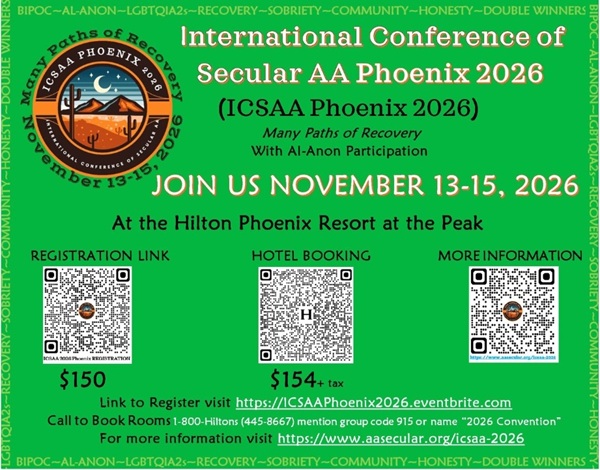
The annual International Conference of Secular AA continues to unite the non-religious in carrying the message of Alcoholics Anonymous throughout the world. The next in-person conference will be November 14-16 in Phoenix, AZ. Information at aasecular.org.
Methinks the problem lies in the nature of belief itself. True believers of any stripe generally take offense when non-believers, by simply existing, provide evidence that the believer’s object of belief is at best irrelevant, and at worst nonexistent/delusional.
My solution was to leave AA altogether.
In 1980s, I discovered We Agnostics AA meeting in LA. There were 1100 AA meetings there then, and for my first year my sponsor suggested that I attend a meeting every day. That was easy to do in LA. When I found Charlie Polochek and Merl Edelman at We Agnostics,in a bank building in the Fairfax District, I kept going there where “all the God stuff was optional.” Charlie recounted how he had first been to such a meeting in Austin, Texas. The meetings in LA initially were poorly attended but over time it became quite expanded. Following my relocation to Mississippi, I attended lots of meetings in Biloxi. During a business meeting of the Biloxi I suggested that our meeting felt more like a prayer meeting than what I thought AA meeting should be but no one agreed with me. So myself and another started a We Agnostics meeting about six years ago. It’s quite sparsely attended but it remains an alternative for those who find “on your knees” somewhat off putting.
Thank you Robin from a fellow Agnostic member of AA with 31 years of sobriety.